Home Shop Snapchat Lenses TikTok Lenses — Coming Soon Custom Avatars About Blog Support
AUGTRIX logo
Augtrix
// Transmissions

The Blog

Augtrix Logo
// Transmission 001 Brand Story July 2026

What Augtrix Is — And Why the Digital World Needed It

The first thing people ask when they see Augtrix is: "What actually is this?" We're not a gaming studio. Not a filter app. Not a fashion brand in the traditional sense. We're something the market hasn't had a clean word for yet — a premium digital wearables company built for the world that already exists.

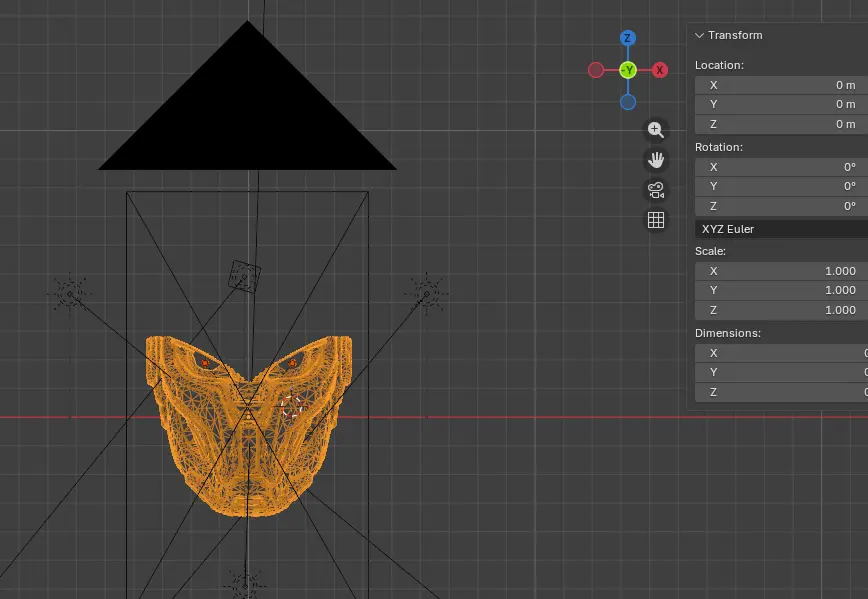
Blender Wireframe
// Transmission 002 Behind the Drop July 2026

Behind Drop 001: Design Decisions, Texture Workflow, and What We Scrapped

Most products launch with a highlight reel. This is the other version — the one where we talk about what actually happened during Drop 001. The decisions that didn't make it. The workflow we rebuilt halfway through. The renders we killed even though they looked good, because good wasn't the standard.

// Upcoming Transmissions — Loading...
Transmission 003
How to use Augtrix assets in VTube Studio and Animaze — full setup guide
Transmission 004
The state of digital fashion in 2026 — where the market is and where it's going
Transmission 005
Top 5 cyberpunk masks for VRChat in 2026 — and how the Predator Cybermask compares
Ready to own your digital identity?
Explore Drops

What Augtrix Is — And Why the Digital World Needed It

The first thing people ask when they see Augtrix is: "What actually is this?" It's a fair question. We're not a gaming studio. Not a filter app. Not a fashion brand in the traditional sense. We're something the market hasn't had a clean word for yet — so let's just say what we are: a premium digital wearables company built for the world that already exists.

The Problem We Saw

Look at the average person on a gaming stream, a Snapchat story, or a metaverse platform. Their digital identity is borrowed. A default skin. A generic filter that 50 million other people are also using at the same moment. None of it says anything about who they actually are — and none of it looks good.

Meanwhile, the same person will spend real money on a pair of sneakers or a jacket they wear three times a year. The physical world has a whole language of personal style. The digital world — where most of us now spend more time than anywhere else — is still running on defaults. That's the gap Augtrix exists to fill.

How We Think About It

Every product we release starts from the same principle: it has to be something we'd want to wear ourselves. Not "good enough for a filter." Not "passable at low resolution." Something that holds up in 4K, looks intentional from every angle, and feels like it was made by someone who cared deeply about the result.

The Predator Cybermask — our first drop — took months to get right. Six separate PBR texture maps. Three export formats. Cinematic-grade renders from every angle. A live Snapchat lens that works on your face in real time with zero setup. A readme so thorough you can deploy it even if you've never opened a 3D file before. That's what a Drop 001 looks like when you build it like it matters.

Who Augtrix Is Built For

Gamers who want their avatar to look like it came from a different era of design. Streamers who are tired of borrowed aesthetics. Metaverse users who treat their digital wardrobe as seriously as their physical one. Content creators who want to show up on screen as something unmistakably themselves. And people who have never touched any of this before — because we ship every asset with a Snapchat lens that takes zero technical knowledge to use.

Augtrix is not gatekept by skill level. You can be a 3D artist importing our OBJ into Blender, or someone who just discovered AR filters last month. The product works for both of you.

What Comes Next

Drop 001 is the benchmark. Drop 002 — The Augtrix Empress — is already in development, pushing the boundaries of digital fashion and wearable AR for streamers and VTubers. Beyond that, we're building virtual companions, advanced body-art filter packs, digital collectibles, and community drops tied to cultural moments — Eid, Christmas, and more.

The mission is simple: make extraordinary the new standard in digital identity. Not just for power users. For anyone with a screen and something to express.

If you haven't tried the Predator Cybermask on Snapchat yet — go do that now. It's free. It takes ten seconds. And it'll tell you more about what Augtrix is than anything written here.

Behind Drop 001: Design Decisions, Texture Workflow, and What We Scrapped

Most products launch with a highlight reel. This is the other version — the one where we talk about what actually happened during Drop 001. The decisions that didn't make it. The workflow we rebuilt halfway through. The renders we killed even though they looked good, because good wasn't the standard.

Where It Started

The Predator Cybermask didn't begin as a mask. It began as a silhouette — an aggressive, predatory shape that felt like it belonged on a character who doesn't ask permission to enter a room. The earliest sketches were wider, more symmetrical, almost helmet-like. We scrapped all of it. Symmetry felt safe. We wanted tension.

The final shape — the asymmetric upper brow, the angular cheekplates, the compressed chin — came from treating the mask as a face within a face. Every surface had to feel intentional when seen from the front, the side, and above. Most masks only look right from one angle. That wasn't acceptable here.

The Texture Problem

We went through four complete texture iterations before landing on the final six-map PBR set. The first version was too clean — it looked like a render, not an object. The second overcorrected into grime territory. Too battle-worn, too generic. The third had the right roughness profile but the teal accent emission was wrong — too saturated, too video-game. It looked like a prop, not a product.

The fourth version — the one that shipped — treats the teal as light-source first, decoration second. The accent lines aren't painted on. They emit. In the right environment, they react to surrounding lighting like a real bioluminescent material would. That distinction took three weeks to get right in the PBR workflow.

What We Actually Scrapped

Two full versions of the mask were completed and killed before Drop 001 was finalized. The first had a more open eye structure — almost visor-like — that worked aesthetically but broke the Snapchat AR tracking. The face-mesh couldn't anchor to the bridge of the nose correctly when the eye region was too open. Scrapped.

The second had a jaw extension — a lower chin plate that added mass and made the mask feel more armored. It looked exceptional in isolation. In motion on a real face, it clipped against necks and collars on roughly 40% of test subjects. Scrapped. The final design is clean precisely because of everything we removed.

The Export Decision

Shipping in three formats — OBJ, FBX, and GLB — wasn't a default choice. OBJ is universal but carries no animation data. FBX handles rigging and bone data for game engines. GLB is the metaverse standard — compact, web-ready, and natively supported by Snapchat, Spatial, and most AR platforms. We could have shipped in one. We shipped in three because your pipeline shouldn't dictate what you can use.

The 4K texture maps are a separate decision. Most digital assets ship at 2K because it's the comfortable middle ground. We shipped at 4K because the Predator Cybermask is designed to be used in environments where it will be seen close. On screen. On a stream. On a face. At that proximity, 2K shows its seams. 4K doesn't.

What This Means for Drop 002

Everything we learned in Drop 001 is already in Drop 002. The Augtrix Empress is being built with a modular texture system — meaning different colorways can be generated from the same base UV map without re-baking from scratch. The AR tracking approach is being rebuilt from the ground up based on the jaw-extension failure. And the export pipeline is getting a fourth format — USDZ — for Apple Vision Pro compatibility.

Drop 001 was the benchmark. Drop 002 is built on what the benchmark taught us.